Reasons Why Your Yard Drainage System Isn’t Working (Or Can’t Keep Up With All That Rain in West Michigan)
West Michigan Homeowner’s Guide to Finally Getting On Top of Yard Water Problems
If you live in West Michigan, especially around Grand Rapids, Caledonia, Byron Center, or Kentwood, you already know that rain isn’t the problem. It’s how fast and how much.
Spring systems are known for dumping inches of water over days. Summer downpours can push 1-2 inches per hour. Surprise hailstorms cause ice dams, leading to backups. And Michigan’s clay-heavy soil just doesn’t absorb water well.
So when your yard floods—even after installing a drainage system—it’s frustrating and confusing.
At Torchwood Landscaping, we hear this all the time:
“Why isn’t my drainage system working?”
Let’s break it down honestly.
Why your drainage system isn’t working (quick answer)
Most drainage systems fail in West Michigan because they are: stormwater drainage problems.
- Undersized for heavy rainfall events
- Installed with poor slope or incorrect materials
- Designed without a proper discharge point
- Overwhelmed by clay soil conditions
- Clogged or poorly maintained
In short: your system was likely designed for average conditions, not peak water flow.

What is a drainage system actually supposed to do?
A properly designed drainage system should:
- Collect water efficiently
- Move it quickly through the system
- Discharge it far enough away that it doesn’t return
- Recover quickly after heavy rain
If your system can’t do all four consistently, it’s going to struggle, both in the day-to-day and during pop-up showers.
The Dirty Truth Most Contractors Don’t Want to Admit
Here it is:
Most drainage systems aren’t designed for real storms.
They’re designed for:
- Light rain
- Ideal soil conditions
- Minimal flow demand
So when a West Michigan storm hits, they fail, not because they were installed poorly, but because they were designed with the wrong idea in mind.
What Most Drainage Contractors Get Wrong
This is where a lot of homeowners get burned.
Common mistakes:
- Designing for average rainfall instead of peak storms
- Using corrugated pipe for long runs
- Relying too heavily on pop-up emitters
- Ignoring soil conditions (especially clay)
- Not planning for maintenance or cleanouts
At Torchwood Landscaping, we’ve found that most failing systems weren’t installed incorrectly. They were underbuilt and unprepared for the unexpected.
1. Your System Was Designed for Something Other Than Michigan Rainfall
West Michigan is not an easy place for drainage.
You’re dealing with:
- Heavy spring rain
- Intense summer downpours (often 1–2” per hour)
- Clay-heavy soils
- Freeze-thaw cycles that shift grading
What this looks like:
- Water backs up during storms
- Pop-up emitters overflow immediately
- Systems that work until the downpour hits
Why it happens:
The system was built for “normal,” not worst-case conditions.
The fix:
- Design for peak rainfall intensity
- Use larger pipe than typical (often 4”+ minimum)
- Add redundancy with multiple discharge points
2. Your Outlet is the Weakest Link
You can move water perfectly—but if it has nowhere to go, you lose.
Common outlet issues:
- Pop-up emitters can’t keep up
- Discharge points are in low, wet areas
- Frozen or clogged exits
- Water dumps into already saturated ground
The truth: The outlet matters just as much as the pipe.
The fix:
- Use daylight outlets when possible
- Ensure the outlet is downhill from the system
- Add multiple exit points
- Avoid relying solely on pop-ups
3. Your Pipe is Too Small (Or Installed Wrong)
This is one of the biggest issues we see in Grand Rapids-area homes.
The typical install:
- 3”–4” corrugated pipe
- Minimal slope
- Long runs
The problem:
That setup struggles to handle high-volume water.
What happens:
- Flow slows due to friction
- Capacity gets exceeded
- Debris builds up
- Bottlenecks form
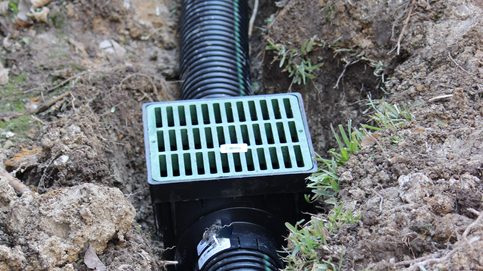
Corrugated vs. Solid Pipe:
Corrugated pipe:
- Cheaper
- Easier to install
- Creates more resistance
Solid PVC pipe:
- Smooth interior = better flow
- Higher capacity
- Longer lifespan
The fix:
- Upgrade pipe sizing where needed
- Use smooth-wall pipe for main lines
- Maintain a slope of 1–2% (1/8”–1/4” per foot)
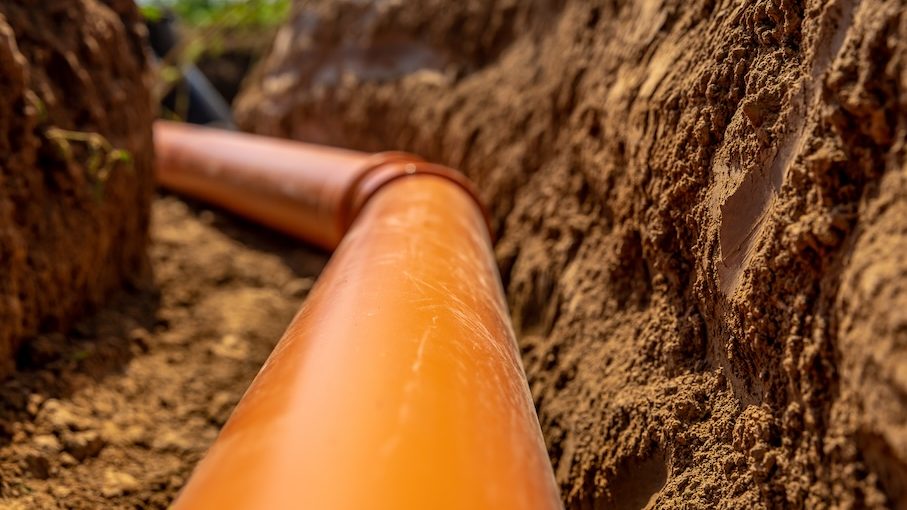
4. Your Yard Doesn’t Actually Drain Well
Here’s a big one:
Drainage systems don’t fix bad soil. They work around it.
West Michigan soil is often clay-heavy, which means:landscape drainage.
- Slow drainage
- High water retention
- Easy compaction
Signs:
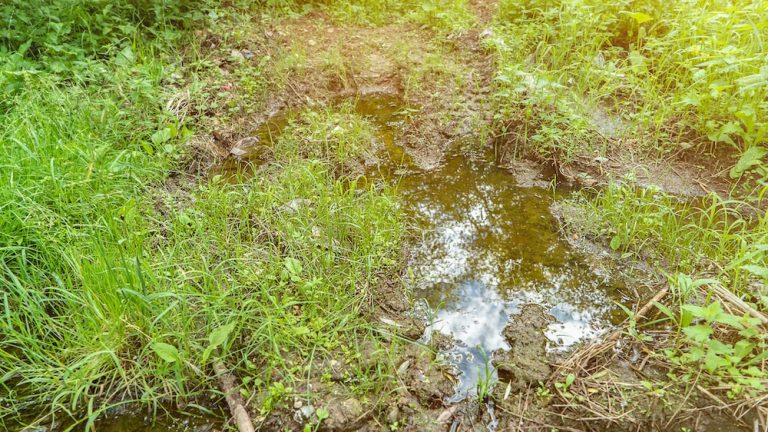
- Standing water across the yard
- Soggy lawn days after rain
- Pooling in multiple areas
Why your system struggles:
If water can’t soak in, your system gets overwhelmed faster.
The fix:
- Soil amendments (sand, organic material)
- Regrading
- Catch basins in low spots
- Combining surface + subsurface drainage
5. Your System is Clogged (Even If You Don’t Realize It)
Drainage systems require maintenance.
Over time, they collect:
- Dirt
- Mulch
- Leaves
- Roof debris
- Shingle grit
What happens:
- Reduced flow capacity
- Partial or full blockages
- Failure during heavy rain
The fix:
- Annual inspection (spring + fall)
- System flushing
- Install cleanouts for access
6. Your System Relies on One Solution
Many systems fail because they rely on just one approach:
- Only a French drain
- Only downspout extensions
- Only a pop-up emitter
The reality:
Drainage requires a layered system.
A better setup includes:
- Downspout collection
- Solid pipe transport
- Catch basins
- Swales or grading
- Smart discharge planning
7. Your Yard Has Changed Over Time
Even a well-built system can fail over time.
Causes:
- Settling soil
- Erosion
- Landscape changes
- Nearby construction
Signs:
- New pooling areas
- Water moving toward your house
- Previously dry areas becoming wet
The fix:
- Regrading
- Adjusting system entry points
- Adding new drainage elements
8. You’re Expecting Too Much
This is the honest truth:
No drainage system can handle every storm.
The goal is performance, not perfection.
A good system should:
- Handle most rainfall events
- Drain within a few hours
- Protect your foundation
If it does those things—it’s working.
What a Properly Designed Drainage System Looks Like
- Proper pipe sizing (built for heavy rain)
- Smooth-wall transport lines
- 1–2% slope for consistent flow
- Smart discharge strategy
- Multiple collection points
- Integrated grading plan
Fix vs. Replace — What Should You Do?
You can fix it if:
- Issue is isolated
- System mostly works
- Layout is solid
You may need redesign if:
- Recurring backups
- Multiple failure points
- Poor original design
How Much Rain Can a Drainage System Handle?
This depends on:
- Pipe size
- Slope
- Outlet conditions
But here’s the key:
Most systems fail because they’re designed for averages, not peak storms.
In West Michigan, peak intensity matters more than totals.
When Should You Call a Professional?
- Water is reaching your foundation
- System fails during every heavy rain
- You’ve already tried fixing it
- You’re planning a major landscaping project
Frequently Asked Questions About Yard Drainage
Why does my yard flood even with a drainage system?
Your yard floods with a drainage system because the system may not be sized correctly or the outlet cannot discharge fast enough.
Is a French drain enough?
No, a French drain is usually not in West Michigan. Clay soil and heavy rain require multiple solutions.
How do I know if my pipe is clogged?
Look for slow drainage, backups, or pooling near inlets.
Should I use corrugated or solid pipe?
Solid pipe is typically better for long-term performance and flow.
Our Professional Opinion (After Hundreds of Installations)
At Torchwood Landscaping, we’ve seen this over and over: Most drainage problems aren’t installation issues—they’re design issues. The biggest mistake is underestimating how much water needs to move during a real storm.
Drainage work can range from:
- A few hundred dollars (minor fixes)
- Several thousand (partial upgrades)
- Larger investments (full redesign)
But waiting always costs more—more headaches, more risks to your foundation, more potential for mold spores and mosquitoes, and more puddles in your yard all year long.
Want a Real Answer About Your Yard Drainage?
At Torchwood Landscaping, we’ll tell you:
- What’s actually causing the issue
- Whether it can be fixed or needs redesign
- What it realistically costs
No fluff. No pressure. Just answers. Get on our books today and we’ll provide you with a free estimate.