Have you ever had your basement flood? What about standing water in your yard, or cracks in your home’s foundation? If so, you know how quickly water damage can go from a minor nuisance to a major headache.
But here’s the thing: it’s likely that poor drainage in your yard is causing a majority of your water problems.
In this blog, we’ll break down how poor drainage in your yard can affect your property, from your lawn to your home’s foundation, and why this is a problem you can’t afford to ignore.
What Is Drainage, and Why Does It Matter?
Let’s start with the basics. Drainage, specifically yard drainage, refers to the way water (be it from rain, sprinkler systems, or snow melt) flows across your property—specifically how it’s directed away from your house, driveway, and landscaping.
Proper drainage ensures that water doesn’t pool in places it’s not supposed to, and redirects water in a way that minimizes the risk of erosion, flooding, and foundational problems.
We’ll put it this way: think about your soil like a giant sponge. When it gets wet, the sponge absorbs water, but just like any sponge, eventually it will get waterlogged if there’s not a proper system to channel it away. Proper drainage in your lawn is like giving that sponge a squeeze—the water you don’t need is dispersed and the water you do need contributes to your happy, healthy lawn.
Signs of Poor Drainage in Your Yard
At first, it might be easy to overlook poor drainage until it’s too late and you have a mess on your hands. Here are a few things to look for before disaster strikes:
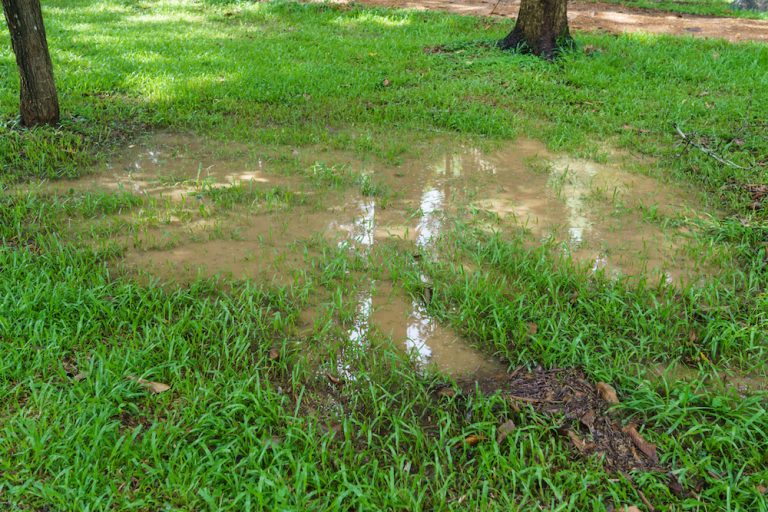
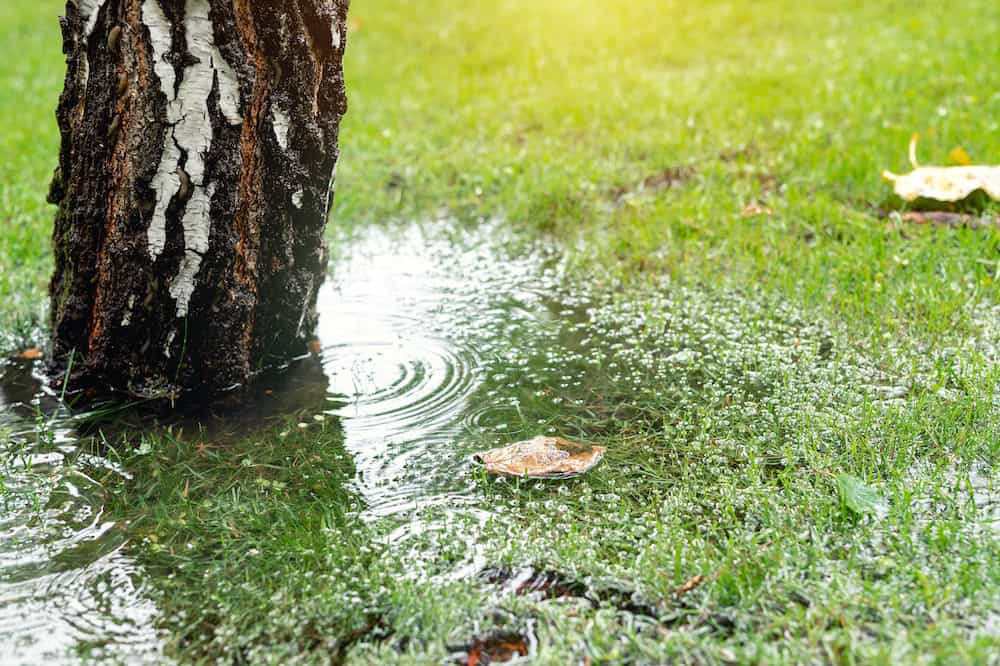
- Pooling Water: If you notice water collecting in certain areas of your lawn after a rain shower, that’s a red flag. These puddles aren’t just inconvenient—they can lead to erosion and lawn damage over time. (Not only that, but standing water is a breeding ground for mosquitoes and bacteria—yuck!)
- Leaking or Flooded Basements: A consistently wet basement is one of the clearest signs that your drainage isn’t doing its job. Water may be seeping through cracks in the foundation or through the floor, which is a huge problem for the structural integrity of your home.
- Cracks in the Foundation: If water is not properly directed away from your house, it can begin to erode the soil around your foundation, making it uneven. This erosion can cause cracks to form, which can weaken the foundation and lead to more expensive repairs down the road. (If this erosion is really bad, you might see cracks in other walls around your home, too. We see this a lot in old homes with outdated foundations.)
- Soggy Lawn: If your lawn feels squishy or squelchy even on a dry day, that’s a sign that the soil is too saturated with water. This can make it harder for your grass or garden plants to grow properly, as they won’t have enough air in the soil to thrive.
- Mold or Mildew: Poor drainage can also lead to higher humidity levels in and around your home, which encourages the growth of mold and mildew. If you’re noticing a musty smell or seeing mold in places where it shouldn’t be, poor drainage might be contributing to the problem.
How Poor Drainage in Your Yard Affects Different Areas of Your Property
Now that you know the signs of poor drainage, let’s take a closer look at how it can affect different parts of your property:
1. Your Lawn and Landscaping
If you’re a homeowner who takes pride in your lawn, you know how devastating it can be to see your carefully manicured grass turn into a swamp. Poor drainage can lead to a water-logged yard, making it harder for plants and grass to survive. Over time, standing water can lead to:
- Erosion: The constant presence of water can wash away soil and grass, leaving bare patches and uneven ground.
- Root Rot: If water sits around plant roots for too long, it can suffocate the roots and cause them to rot. This can result in dying plants and shrubbery that require replacing.
- Fungus Growth: Excess moisture can also foster the growth of fungi, which is bad news for your grass.
2. The Foundation of Your Home
Perhaps the most concerning effect of poor drainage is the potential damage to your home’s foundation. When water isn’t properly directed away from the base of your house, it can pool around your foundation, leading to a number of issues:
- Cracks in the Foundation: Water can seep into small cracks in your foundation, causing them to expand over time. These cracks can compromise the structural integrity of your home and lead to costly repairs.
- Settling and Shifting: Water can erode the soil beneath your foundation, causing it to shift or settle unevenly. This can result in uneven floors, sticking doors and windows, and more significant structural damage if left unaddressed.
- Basement Flooding: A wet foundation often leads to a wet basement, which is not only a hassle to clean up but can also result in long-term damage to walls, flooring, and furniture. More seriously, a flooded basement can ruin your home’s foundation if the moisture continues to seep in.
3. Driveways, Walkways, and Patios
If your driveway or patio isn’t properly sloped or has poor drainage, you’ll likely see puddles form in these areas after rain. Over time, this standing water can.
- Cause Cracks: Constant exposure to water can cause concrete or asphalt to crack and degrade more quickly.
- Create Safety Hazards: Puddles and water accumulation can create slip-and-fall hazards for you, your family, and guests. And once those cracks and uneven surfaces start to appear, so do more trip hazards.
- Encourage Weed Growth: Standing water can create the perfect environment for weeds and moss to thrive, especially in cracks and joints.
4. The Interior of Your Home
It might surprise you, but poor drainage can also affect the interior of your home. When water is allowed to pool too close to the foundation, it can seep inside through cracks or gaps in your walls or floors. This can lead to:
- Water Damage: Water seeping into your home can damage flooring, walls, and furniture. This type of damage can be expensive to repair and can also cause mold and mildew to grow in your walls, leading to health problems.
- Increased Humidity: Excess moisture in your home can increase humidity levels, which, if unchecked, can contribute to wood rot, mold, and other structural problems.
The Long-Term Consequences of Ignoring Drainage Issues
While poor drainage might seem like a minor issue at first, ignoring it can lead to serious long-term consequences. Here’s what could happen if you don’t take action:
- Costly Repairs: The longer you let poor drainage go unaddressed, the more expensive the repairs will be. Simple drainage fixes are affordable, but ignoring the issue could result in expensive foundation problems, water damage, and mold remediation.
- Decreased Property Value: Homes with poor drainage issues are often harder to sell and may be valued lower than similar homes with no drainage problems. Buyers are wary of properties with ongoing water issues because they know the costs involved in repairing and maintaining them.
- Health Issues: Persistent moisture can lead to mold and mildew, which can cause respiratory problems, allergies, and other health concerns.
How to Fix Poor Drainage on Your Property

Now that you know how poor drainage can affect your property, let’s talk about what you can do to fix it. The good news is, most drainage problems can be fixed relatively easily with the right approach.
- Fix the Grading: Your property should slope away from your home. If water is pooling near your foundation, you might need to regrade your yard to ensure proper drainage. This might involve adding soil to low spots or re-sloping the ground to create a more effective runoff.
- Install a French Drain: A French drain is a trench filled with gravel and a perforated pipe that redirects water away from problem areas. This can be an effective solution if you have standing water near your foundation or in low spots in your yard.
- Extend Downspouts: Ensure that your gutters are working properly and that your downspouts direct water at least 20 feet away from your home’s foundation. You can install buried extensions to help with this, and if you don’t have gutters, it’s time to consider installing them.
- Use Drainage Swales: A swale is a shallow ditch or trench designed to carry water away from your property. This is often a great solution for areas of your lawn where water tends to pool.
- Maintain Your Drainage System: Once you’ve addressed your drainage issues, make sure you keep up with regular maintenance. Clean your gutters, clean your pop up drains and catch basins, check for clogs, and inspect your drainage system every year to keep it in top shape.
- Torchwood Tip: You can also create a more water-smart lawn using landscaping like rain gardens or drought-resistant plants. Check out our tips for a water-smart lawn!
Don’t Let Bad Drainage in Your Yard Rain on Your Parade
Poor drainage might not be something you think about every day, but it can have a serious impact on the health of your property—and your wallet. From lawn damage to foundation problems, the consequences of ignoring drainage issues are far-reaching. The good news is, with a little attention and the right solutions, you can prevent drainage problems from taking a toll on your home.
If you’re experiencing drainage issues or suspect your property might have a drainage problem, don’t wait for the next storm to prove you wrong. Call Torchwood Landscaping to protect your property and save yourself from costly repairs down the road.